Learn about the MIT CSHub’s research, communications, and implementation impacts across sustainability, infrastructure, resilience, and workforce since Spring 2023 in our newly-released Spring Review.

Learn about the MIT CSHub’s research, communications, and implementation impacts across sustainability, infrastructure, resilience, and workforce since Spring 2023 in our newly-released Spring Review.
Learn how building life cycle assessment can inform scope 1-3 accounting for producers in our latest brief authored by Ipek Bensu Manav and team.

The MIT Electron-conductive Cement-based Materials Hub (EC^3 Hub), an outgrowth of the MIT CSHub, was established by a research agreement with Aizawa Concrete of Japan. The EC^3 Hub, read as “EC-cube,” will investigate the infrastructure applications of multifunctional concrete — concrete having capacities beyond serving as a structural element, such as functioning as a “battery” for renewable energy.

How can the cement industry enable widespread adoption of carbon capture, utilization, and storage? In this research brief, Elizabeth Moore and team investigate a model carbon transport network to serve the cement industry. Pipeline design scenarios were analyzed to investigate the location of “carbon hubs” of nearby industrial facilities that could tap into pipelines at low cost. This would allow for the cement industry to enable carbon capture across a much larger swath of the economy.

In this whitepaper, Hessam AzariJafari and Randolph Kirchain join Francesca Lolli, Sean Monkman, and Bungane Mehlomakulu of ICON to present a comparative analysis of the life cycle performance of 3D-printed and stick frame homes in various U.S. climate conditions.

Hessam AzariJafari will be a featured panelist at the Transatlantic Institute for Sustainable Trade’s roundtable on 1/31, “Creating a Market for Green Cement and Concrete on Both Sides of the Atlantic,” in Washington, D.C. The roundtable will discuss how regulatory frameworks can support the market uptake of cleaner cement and concrete technologies and accelerate decarbonization efforts.
This event is organized by the EU-U.S. Trade and Technology Dialogue.
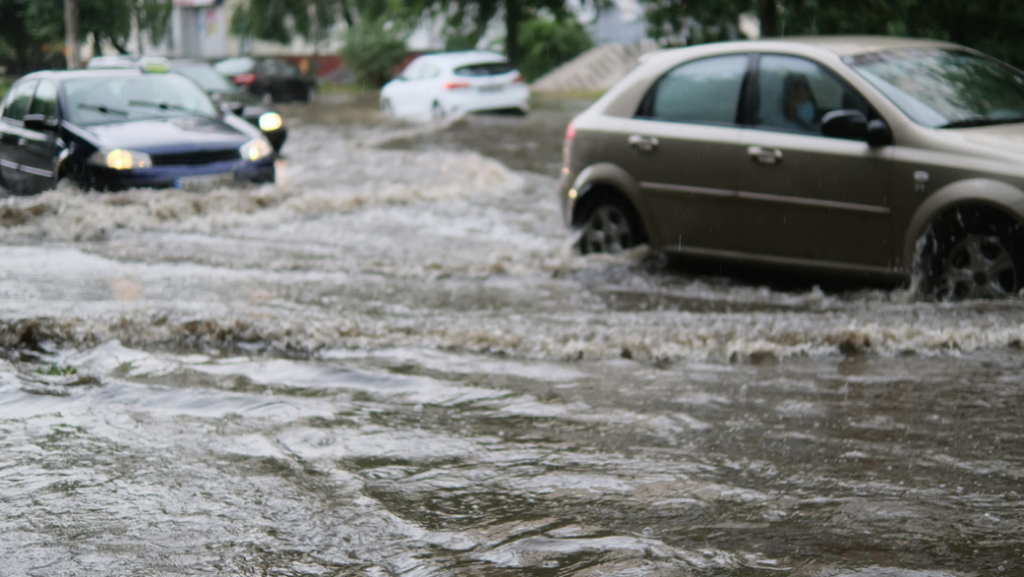
Danial Amini and Johannes Kalliauer describe an accessible and inexpensive flood modeling approach accounting for city texture.
Click here to read more.
In their new op-ed in The Hill, Randolph Kirchain and Hessam AzariJafari explain why road improvements enhancing pavement stiffness and smoothness are essential to improve the efficiency and environmental performance of all vehicles. The majority of vehicles on the road are projected to be powered by traditional engines up through 2050, making it essential for states and municipalities to use this lever to cut emissions. The authors propose that the Federal Highway Administration should expand their current carbon performance measure to include emissions associated with road performance.

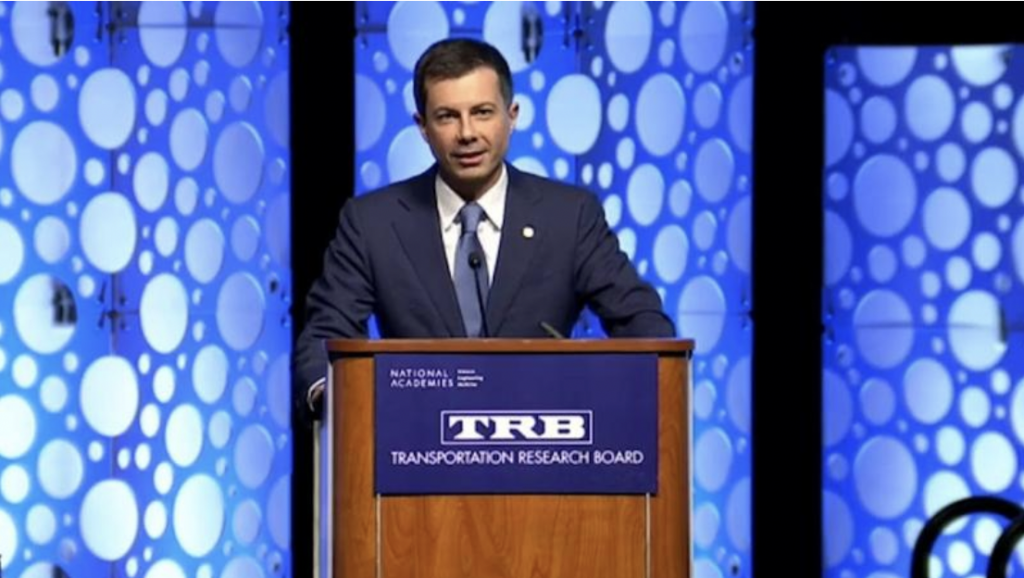
Franz-Josef Ulm sat on a panel with Pete Buttigieg at the Transportation Research Board’s 2024 meeting yesterday. The panel was part of a U.S. Department of Transportation-led workshop titled “New Materials for Infrastructure: Reinventing the Roadway, Runway, and Railway.”